
The robot won’t power on at all
Even on the charger, nothing happens. The pack has entered a deep-discharge state and the BMS has locked it out to protect the cells.
New York, USA · NAO V4 / V5 / V6 · US customers only
Original NAO battery packs are discontinued, scarce and expensive. I rebuild them: all six cells replaced with new brand-name 18650s, the BMS brought back out of deep-discharge lockout, and the finished pack load-tested through a full charge cycle before it ships back to you. Based in New York and serving NAO owners across the United States.
Symptoms
Almost every NAO battery failure comes down to the same thing: the pack sat uncharged for months, the cells dropped below their safe floor, and the battery management board latched into a protective lockout. The robot is fine. The pack is recoverable.

Even on the charger, nothing happens. The pack has entered a deep-discharge state and the BMS has locked it out to protect the cells.
The charger LED never turns green, or the robot reports a charging fault. One or more cells can no longer reach their target voltage.
A healthy NAO runs roughly 60 minutes in active use and about 90 minutes in normal use. If you’re getting five, the cells are worn out.
NAOqi shows no battery, an implausible percentage, or a level that jumps around. Usually a cell-balance or communication problem on the BMS.
The pack holds voltage at rest but collapses under motor load. Internal resistance has climbed past what the servos can pull.
Original packs are discontinued and hard to source at any price. Rebuilding the pack you already own is usually the fastest route back to a working robot.
Before you ship anything: a NAO battery only charges when the robot is powered off and connected to its adapter, and the pack’s internal safety refuses to charge above roughly 50 °C. Power the robot down completely, leave it on the charger for a few hours, and let a warm pack cool for 20 minutes. If it still won’t take a charge, it’s a rebuild candidate.
The Service
This is not a reset or a trickle charge. The pack is opened, stripped back to the battery management board, and rebuilt around a completely new set of cells.
Your pack arrives and gets logged. I measure pack and per-cell voltages, check the state of the battery management board, and confirm the failure is cells rather than a damaged connector or a robot-side fault.
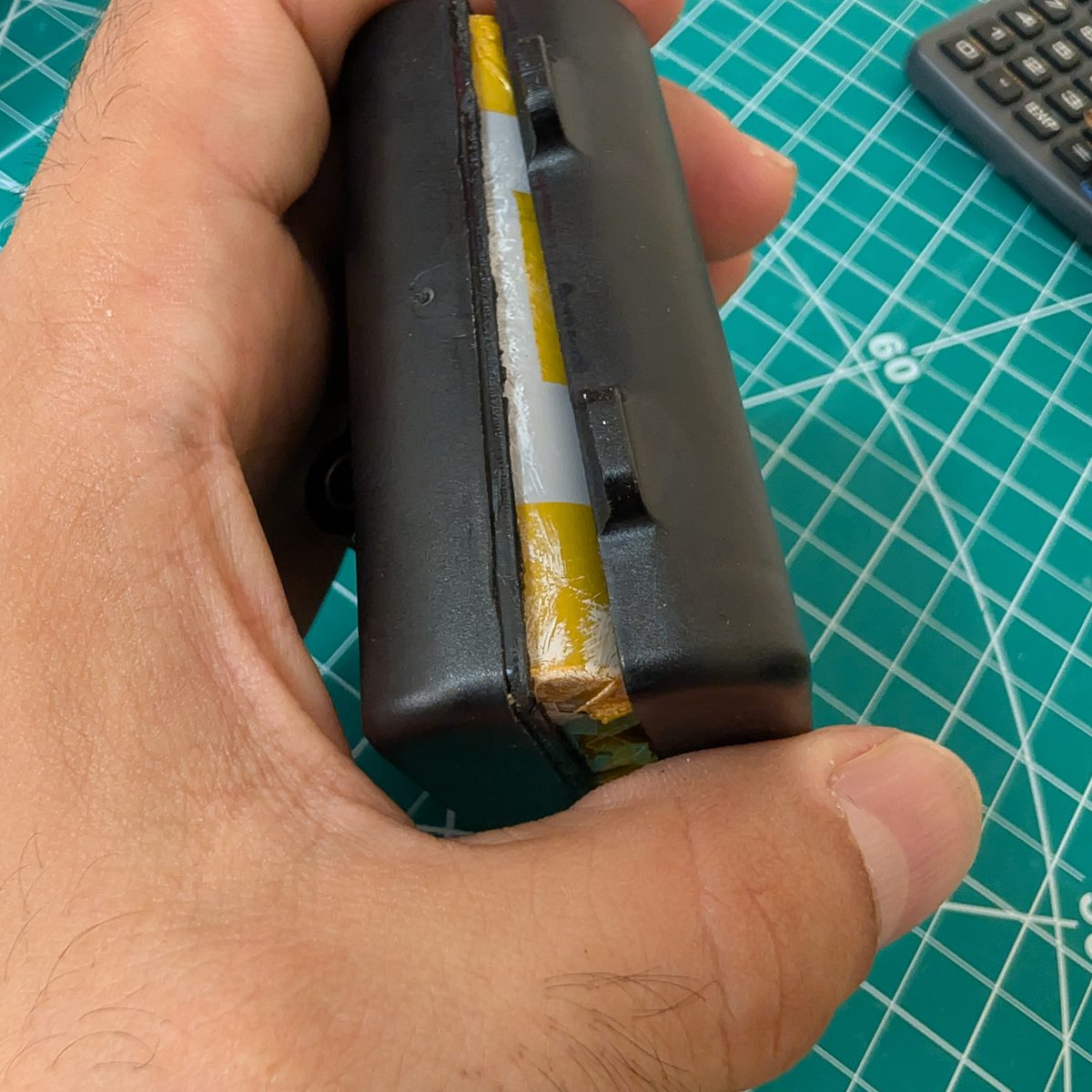
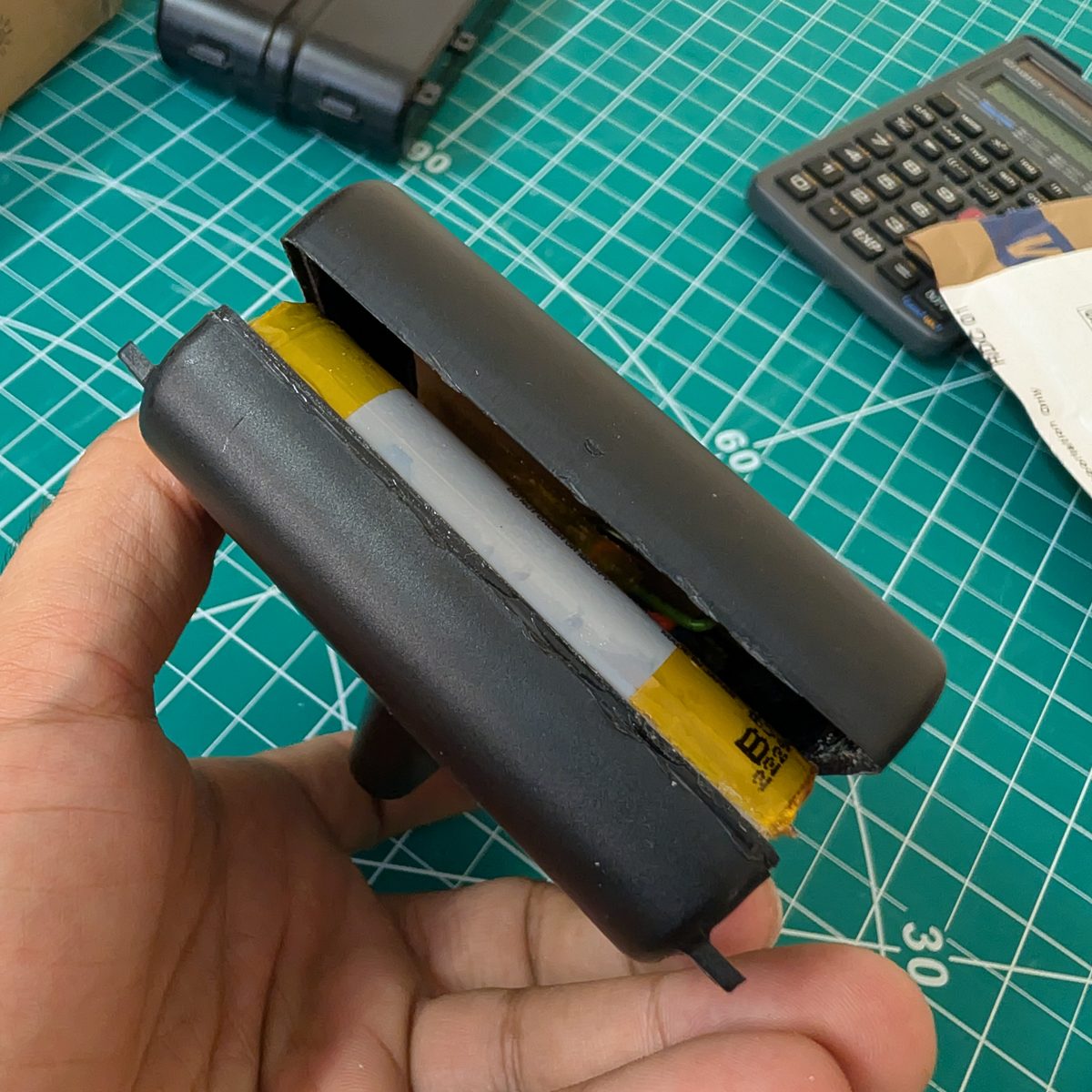
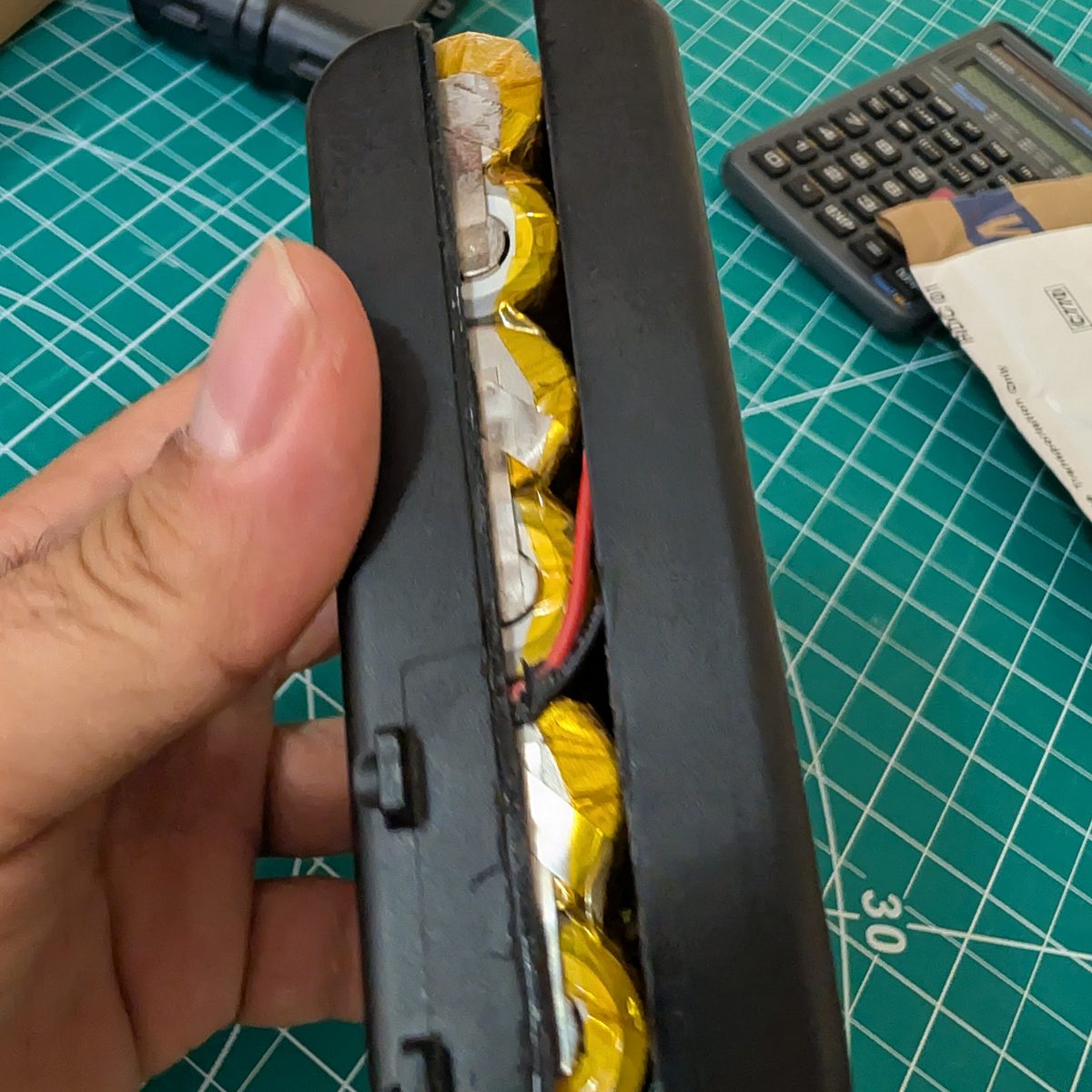
NAO packs are bonded shut at the factory. The seam is separated slowly and by hand so the housing, the contact block and the cover-detect contacts all survive intact and the pack still seats properly in the torso.
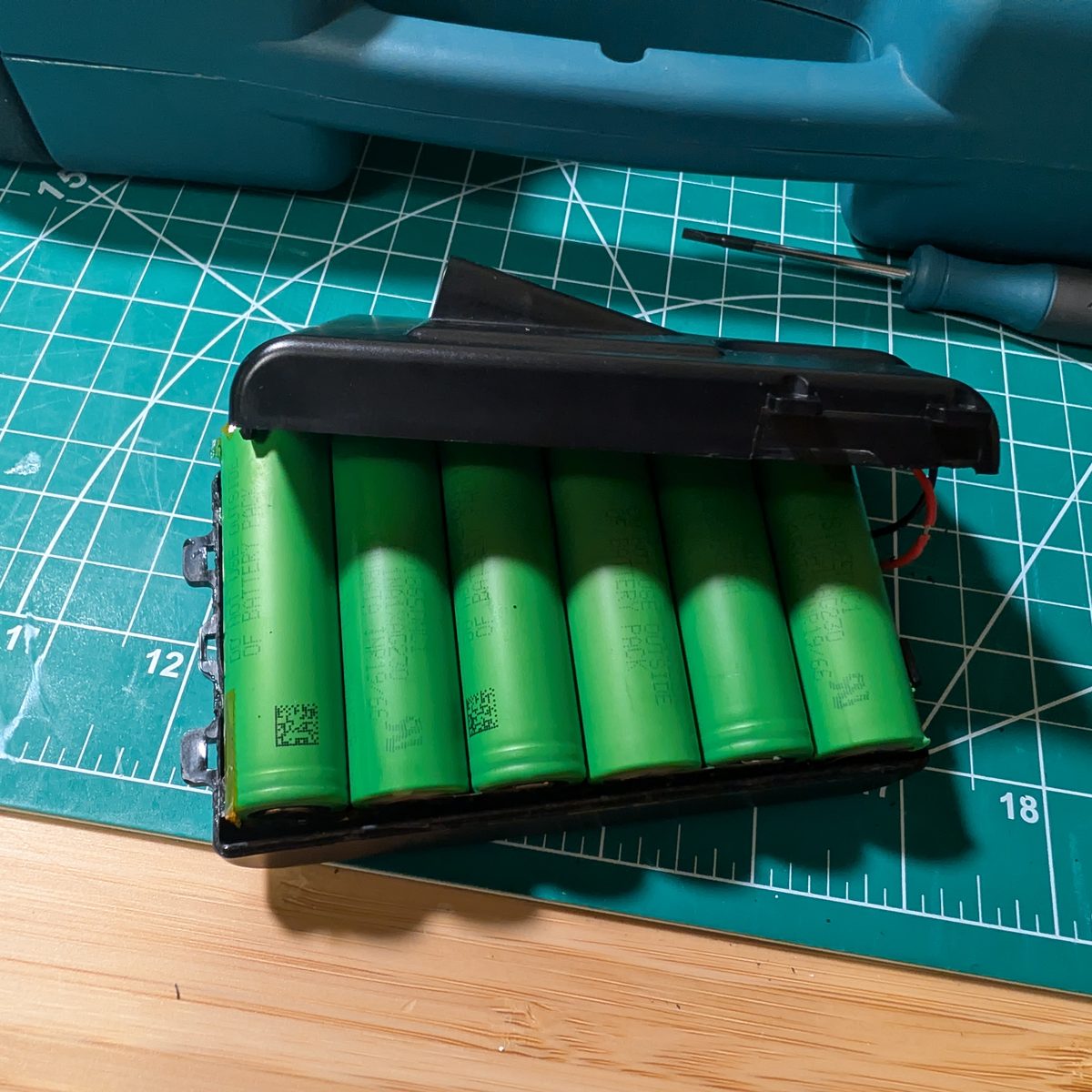
The full six-series string is replaced with new brand-name high-drain 18650 cells rated well above NAO’s discharge requirement. Cells are capacity-tested and matched to each other before assembly, so the pack balances properly for the rest of its life.
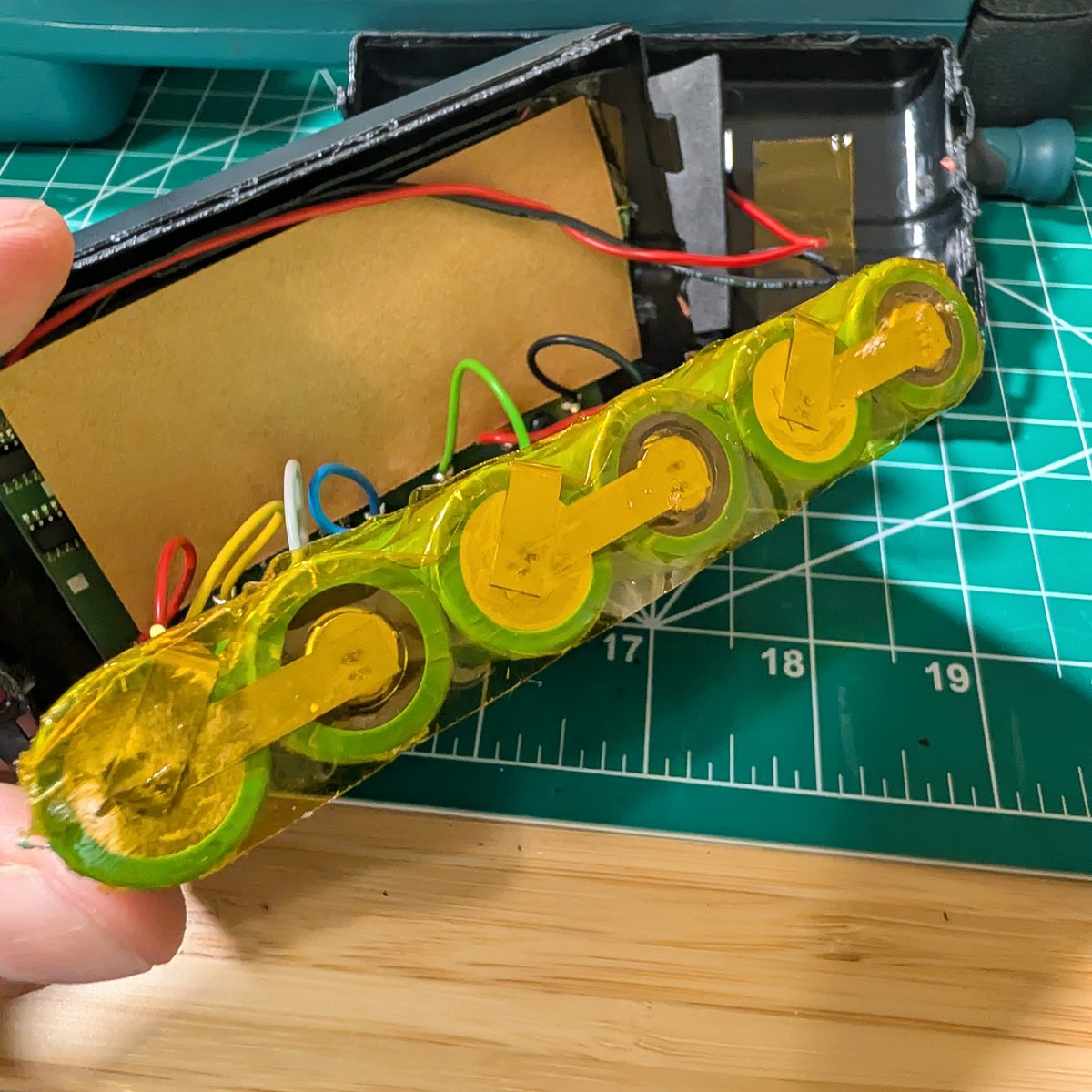
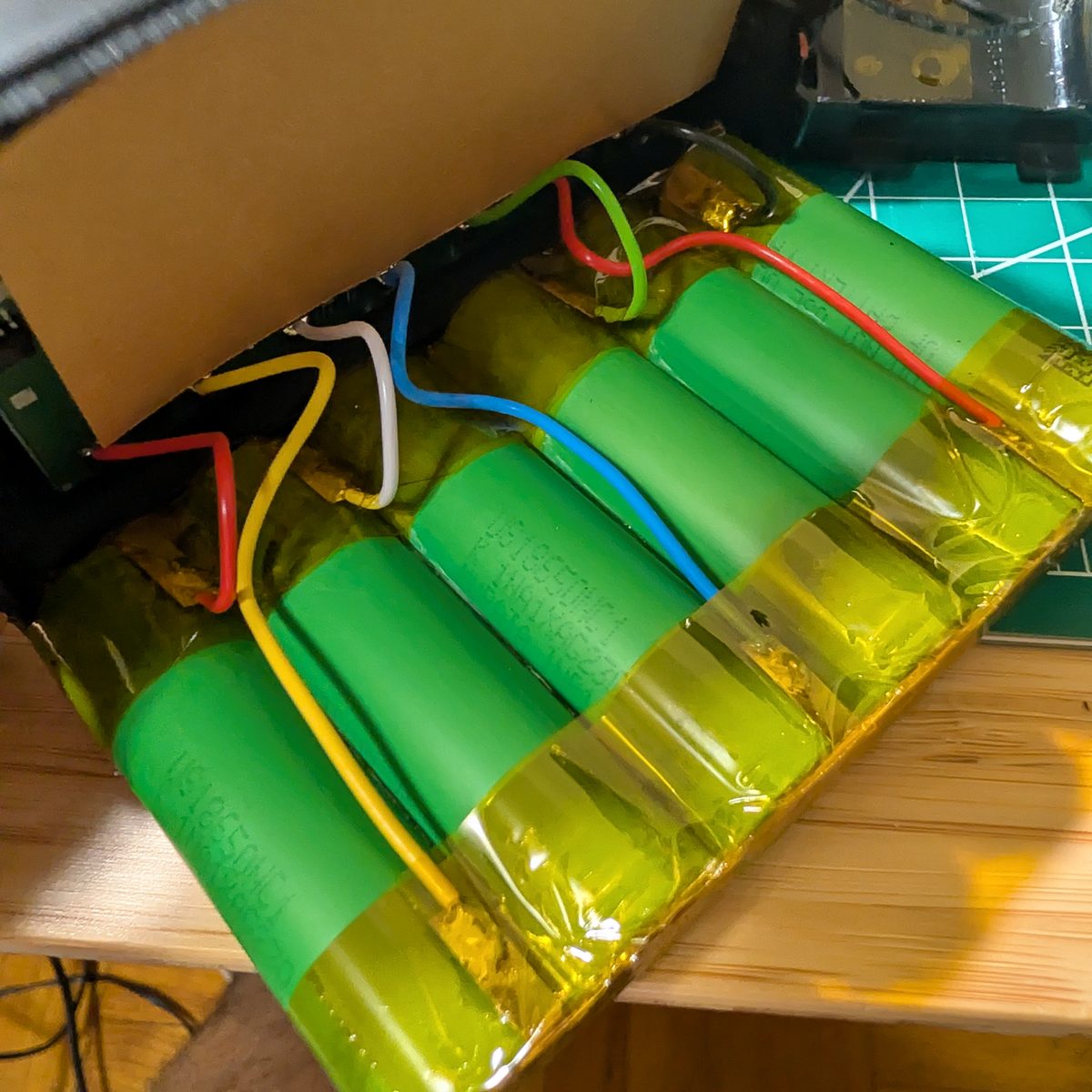
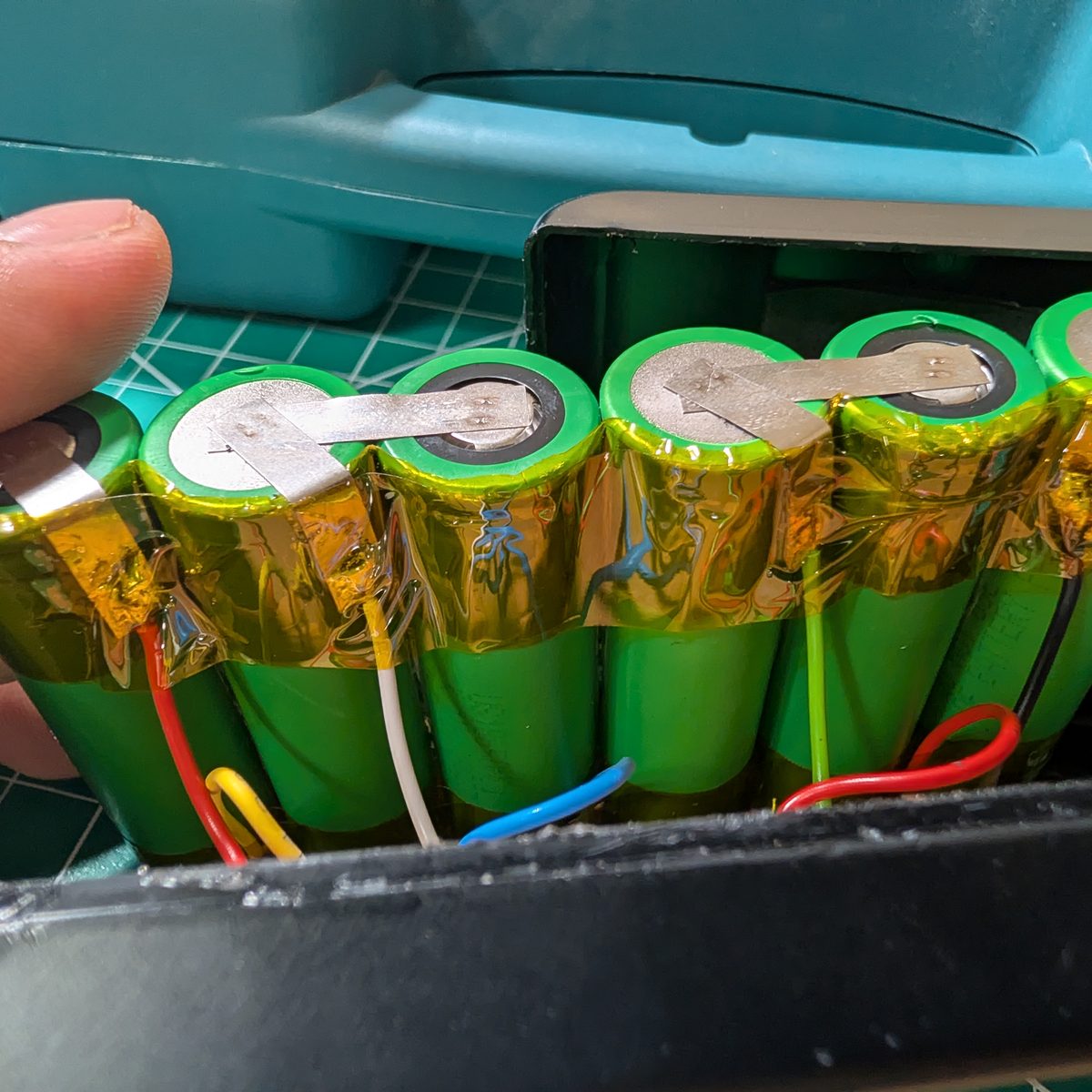
Nickel strip is spot-welded to the cell terminals. Welding avoids dumping heat into the cell the way a soldering iron does, which is the difference between a pack that lasts years and one that degrades early. Joints are insulated with Kapton tape and fish paper.
The original board is refitted in the correct sense-wire order and walked back out of its deep-discharge protection state, then given a full balance charge so every cell starts level.
The finished pack is cycled and load-tested against NAO’s real draw, not just checked for open-circuit voltage. I confirm it charges to spec, holds up under load, and reports correctly before it goes anywhere.
The housing is closed and bonded, the pack is labelled, and it ships back to you protected and at a shipping-safe state of charge. It drops straight into the robot — no modification to your NAO.
Two things I would rather you hear from me now than discover later.
NAO packs are bonded shut at the factory and there is no clean way in. Most open along the seam with nothing worse than light scratching, but a shell can crack or chip while it is being pried apart. If that happens I glue it back and the pack goes back together sound — it holds, it seals, it seats in the torso properly, and it does not affect how the battery works or how long it lasts.
What I cannot promise is that it will look untouched. Expect a rebuilt pack to look like a pack that has been opened.
I replace cells. What I cannot replace is the battery management board — it is specific to NAO and is not sold separately. If that board is genuinely damaged, rather than just latched into deep-discharge protection, the pack cannot be rebuilt. Sometimes that is clear at diagnosis; occasionally it only becomes clear once the pack is open.
If I hit that, I stop and tell you immediately — and you owe me nothing. I only charge once a pack is rebuilt, tested and confirmed working, so a repair that cannot be done is not a repair you pay for. I will not hand you back a pack that does not work and call it a repair.
Compatibility

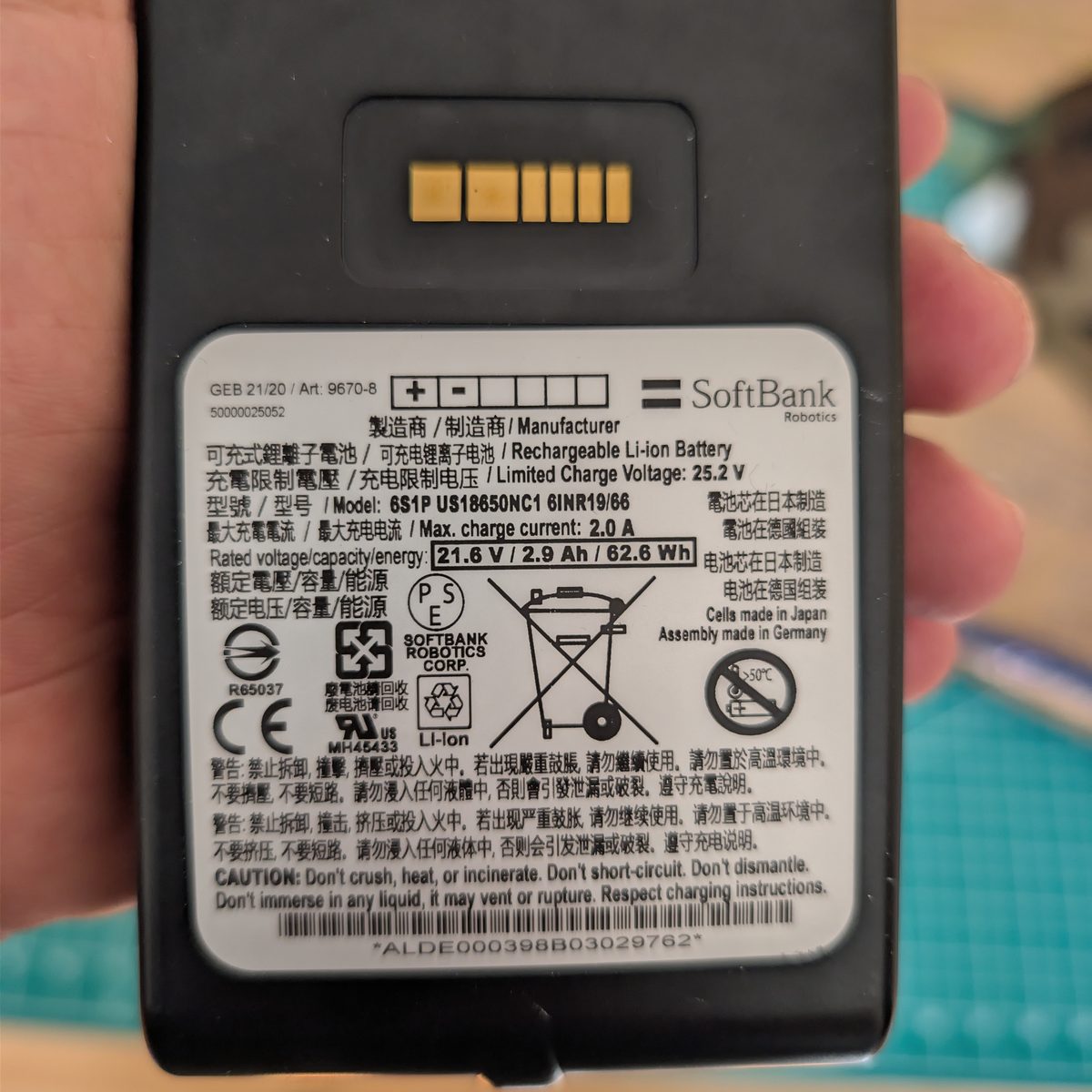
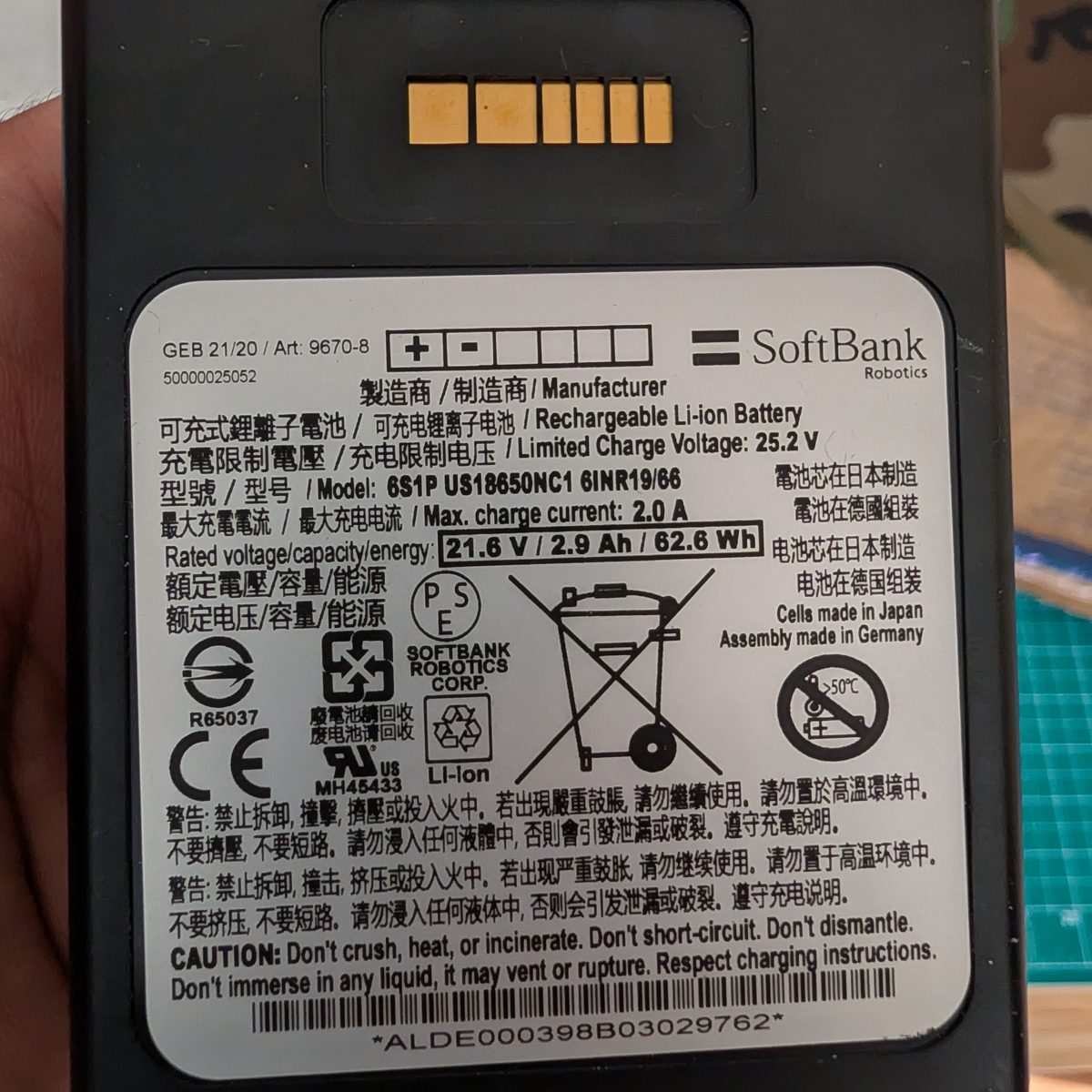
Every NAO generation from V4 onward uses the same six-cell lithium-ion architecture at 21.6 V nominal. Capacity varies by production run — both the 48.6 Wh and the 62.6 Wh packs are covered.
| Model | Pack | Nominal | Energy | Status |
|---|---|---|---|---|
| NAO V6 | 6S1P · six 18650 cells | 21.6 V / 2.9 Ah | 62.6 Wh | Supported |
| NAO V5 | 6S1P · six 18650 cells | 21.6 V / 2.25–2.9 Ah | 48.6–62.6 Wh | Supported |
| NAO V4 | 6S1P · six 18650 cells | 21.6 V / 2.25 Ah | 48.6 Wh | Supported |
| NAO V3.x | Earlier pack revision | 21.6 V | — | Ask first |
Specifications per Aldebaran / SoftBank Robotics NAO documentation. Your rebuilt pack is built to the same electrical spec as the original, so the robot and the charger behave exactly as they did when it was new.
Repairs
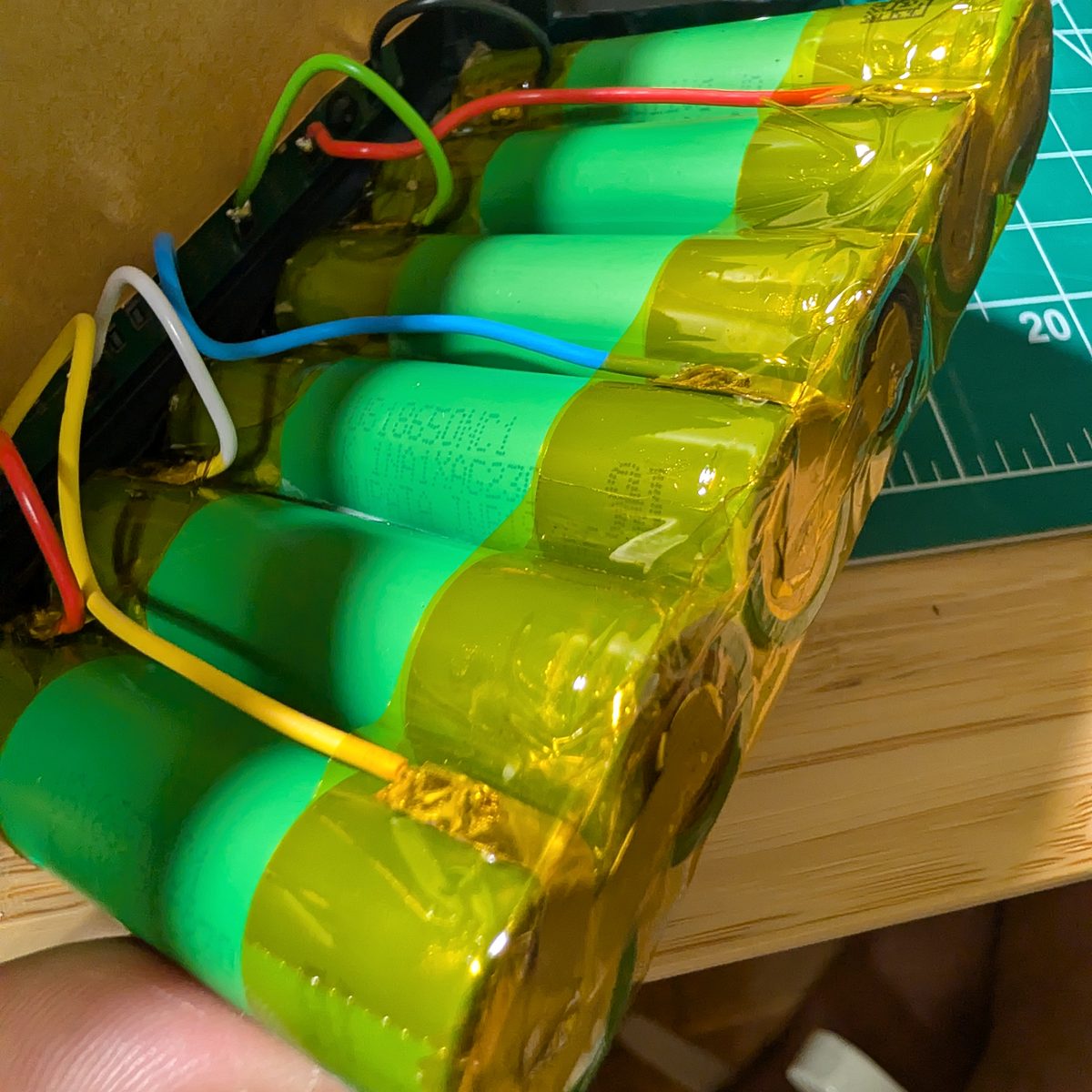
One pack, start to finish Every rebuild is photographed at teardown and again at final test. A few from the queue.mdash; intake, teardown, new cells, rebuild and refit. Every job is photographed the same way.

About
This started with my own NAO. Its battery had sat too long, dropped into deep discharge, and the robot simply would not wake up. A replacement pack was discontinued, hard to find and expensive enough to make me hesitate about a robot that was otherwise perfectly healthy.
So I opened the pack. I worked out how the cells, the sense wires and the battery management board fit together, sourced proper cells, rebuilt it, and got my robot back. Then other NAO owners — schools, university labs, research groups and individuals sitting on the same dead pack and the same dead end — started asking whether I could do theirs too.
That is what this is. Not a factory: one person who has done this repair many times over, does it carefully, and would rather see a working robot than another one retired over a part that costs a fraction of the machine it powers.
Get started
Message me first with your NAO model and what the pack is doing. I will confirm it is a rebuild candidate and send you the shipping details before you post anything. This is a United States–only service — I ship to and from US addresses.
Send the form. Tell me your NAO version and the symptoms — will not power on, will not charge, short runtime. I will confirm whether it is worth rebuilding.
Ship the pack only. Just the battery, not the robot. Follow the packing and labeling steps below — I will send you the address.
Rebuild and test. New cells, BMS recovery, full cycle verification on the bench. You hear from me at every step — when it lands, what I find, when it goes on test and when it ships.
Back to you within two weeks. Repaired and shipped back inside two weeks of the pack reaching me, ready to drop straight into the robot.
Flat rate, per pack
$250
Charged only after the rebuild is finished, tested and confirmed working. Nothing up front.
Get in touch before you ship anything — I will confirm the pack is a rebuild candidate and send you the address. US addresses only.
Fill this in and I will come back to you with whether it is a rebuild candidate, where to ship it and what to expect. Nothing is committed at this stage — please do not send anything until you have heard from me.
I read every enquiry myself and will reply to the address you gave, usually within a day or two.
Please do not ship anything yet — wait until I confirm the pack is a rebuild candidate and send you the address.
Shipping
A NAO pack is a lithium-ion battery travelling on its own, which the carriers regulate as hazardous material. The good news: at 48.6–62.6 Wh it sits well inside the limits for the simplest set of rules, and both USPS and UPS will carry it by ground. Here is exactly what to do.
If the pack is swollen, cracked, leaking, deformed, smells odd, or has ever been hot to the touch, stop and send the form before you do anything else. USPS prohibits damaged, defective or recalled lithium batteries in the mail entirely. UPS will carry them, but by ground only, within the lower 48 states, and under stricter packaging rules. A dead flat pack is normally fine to ship. A physically damaged one is not, and it is not worth the risk to you or to anyone handling it.
Cover the metal contact block with electrical or insulating tape so nothing can bridge the terminals. A short circuit is the single thing every one of these rules exists to prevent.
Seal it in its own plastic or antistatic bag. Nothing metal goes in the box with it — no tools, no screws, no loose change, no second battery.
Surround the pack with non-conductive cushioning — bubble wrap, foam or paper — on every face, so it cannot shift, rattle or press against a wall of the box.
A sturdy corrugated box only. No padded envelopes, poly mailers or any soft-sided pack — the carriers specifically exclude those. The packed box has to survive a 1.2 metre (about 4 foot) drop without the battery coming loose or being damaged.
Apply the lithium battery mark showing UN3480 to the address side, plus the wording your carrier requires (below). Keep it flat, durable and legible — not folded around a corner and not covered by tape.
Ground only, never air. If you drop it at a counter, tell the clerk it contains a lithium-ion battery. Declaring it honestly is what keeps it moving instead of getting pulled.
Lithium-ion batteries shipped by themselves are surface transportation only — they may not travel by air, so Ground Advantage is the service to pick.
Required on the address side
The DOT lithium battery mark showing UN3480, plus this text:
“Surface Mail Only, Lithium-ion Batteries — Forbidden for Transportation Aboard Passenger Aircraft”
UPS Ground also carries these packs, and unlike USPS it will accept a damaged or defective battery — by ground only, within the lower 48 states, and packaged to a stricter standard.
If you are unsure, ask UPS
UPS runs a hazardous materials support line for exactly this kind of question. Their number and current requirements are on the UPS pages linked below — go to them directly rather than relying on a number quoted second-hand.
It is the label with the red hatched border and the battery symbol, with the UN number printed in the box beside it — UN3480 for lithium-ion batteries shipped on their own, which is what a NAO pack is. Pre-printed UN3480 labels cost a few dollars a roll from any shipping supplier and are far easier than drawing one to spec. Put it on the same side as the address, keep it flat, and do not tape over it.
Carrier rules change, and the carrier always has the final say. The USPS and UPS pages linked above are the authority — give them a look before you ship rather than relying on this summary. If anything is unclear, get in touch before you send the pack and I will help you sort it out.
FAQ
Usually not. When a NAO pack sits uncharged for a long time the cells fall below their safe minimum and the battery management board latches into a deep-discharge protection state. Once locked, the pack will not accept a charge no matter how long you leave it connected, and the robot appears completely dead. The robot itself is normally fine — the pack needs rebuilding and the BMS needs to be brought back out of lockout.
The board can be brought back out of its protection state, but the cells that triggered it are no longer trustworthy. Cells taken that low suffer permanent internal damage and can behave unpredictably afterwards. That is why the service replaces all six cells rather than trying to nurse the old ones back — the safe fix is new cells behind a working BMS.
NAO V4, V5 and V6, which all use the same six-cell 21.6 V lithium-ion architecture, in both the 48.6 Wh and 62.6 Wh capacities. For older V3.x packs, get in touch first so I can confirm the revision before you ship.
All six, every time. Mixing new cells with aged ones creates a pack that drifts out of balance quickly and fails again sooner. New cells are capacity-tested and matched to each other before they go in.
New, brand-name, high-drain 18650 cells rated well above what NAO draws. Nothing reclaimed, nothing pulled from another pack.
No — send the battery pack only. It comes out of the torso without tools. Keep the robot and the charger with you.
The pack is rebuilt and shipped back within two weeks of reaching me. That window covers diagnosis, the rebuild itself and the full test cycle — it does not include the time your package spends in transit on the way to me. You will hear from me at each stage: when it arrives, what I find when I open it, when it goes on test, and when it ships back with the tracking number.
$250 per pack, flat. That covers all six new cells, the BMS recovery, the balance charge, the full load test and return shipping to your US address. There is no separate diagnosis fee and no parts surcharge — one price, whatever the pack turns out to need. You are charged only after the rebuild is finished and confirmed working: nothing up front, and nothing at all if it cannot be fixed.
NAO packs are bonded shut at the factory and there is no clean way in, so it can happen. If a shell cracks or chips while I am prying it apart I glue it back, and the pack goes back together sound — it holds, it seals, it seats in the torso properly, and it has no effect on how the battery performs or how long it lasts. What I cannot promise is that it will look untouched.
I replace cells, but I cannot replace the battery management board — it is specific to NAO and is not sold separately. If that board is genuinely damaged rather than just latched into deep-discharge protection, the pack cannot be rebuilt. Sometimes I can see that at diagnosis; occasionally it only becomes clear once the pack is open. Either way I stop there and tell you immediately — and there is no charge. I only invoice once a pack is rebuilt, tested and confirmed working, so you never pay for a repair that could not be done. I will not hand you back a pack that does not work and call it a repair.
Yes. It is built to the same electrical specification — 21.6 V nominal, same charge profile, same connector and cover-detect contacts — so your existing charger works normally and NAOqi reports the battery the way it always did. It drops into the robot with no modification.
I will tell you. You get a message when the pack arrives, another once I have opened it and know what I am dealing with, another when it goes on test, and a final one with the tracking number when it ships back. You are dealing with me directly the whole way through — there is no ticket queue and no handoff.
Deep discharge is what kills these packs, and it is entirely preventable. Fully recharge the battery at least once every three months even when the robot is not in use — that alone prevents most NAO battery failures. Remember that a NAO charges only when it is powered off and connected to its adapter, and that the pack refuses to charge if it is above roughly 50 °C, so let a warm one cool for 20 minutes first.
I am based in New York and this is a United States–only service. I accept packs from US addresses and ship them back to US addresses. I am not taking international work at the moment — shipping lithium batteries across borders adds customs and dangerous-goods paperwork on both ends that is not practical at this scale. If you are outside the US, there are repairers in Europe who do the same job.
A NAO pack ships by ground only, never air, with the contacts taped, the battery bagged and cushioned in a rigid box, and the box marked with the UN3480 lithium battery mark. At 48.6–62.6 Wh it sits inside the simplest set of carrier rules, so both USPS Ground Advantage and UPS Ground will take it. The shipping section above walks through it step by step, including the exact wording USPS requires on the label and links to both carriers’ official pages.
Send the form first — do not just ship it. USPS prohibits damaged or defective lithium batteries in the mail entirely, and while UPS will carry them by ground within the lower 48 states, it is under stricter packaging rules. A pack that is simply flat and unresponsive is normally fine to send. One that is swollen, cracked, leaking or has been hot needs a conversation first.